Project 2: Science Museum Group
Positioning and Trends: Research Task
The Monuments Project, inspired by the podcast A Brief History of Stuff, aims to ignite curiosity and foster a love for learning in young children through engaging audio trails at the Science Museum. Our mission is to reveal the fascinating stories behind everyday objects, encouraging children to see the extraordinary in the mundane. By making history accessible and fun, we strive to inspire the next generation of inquisitive minds.
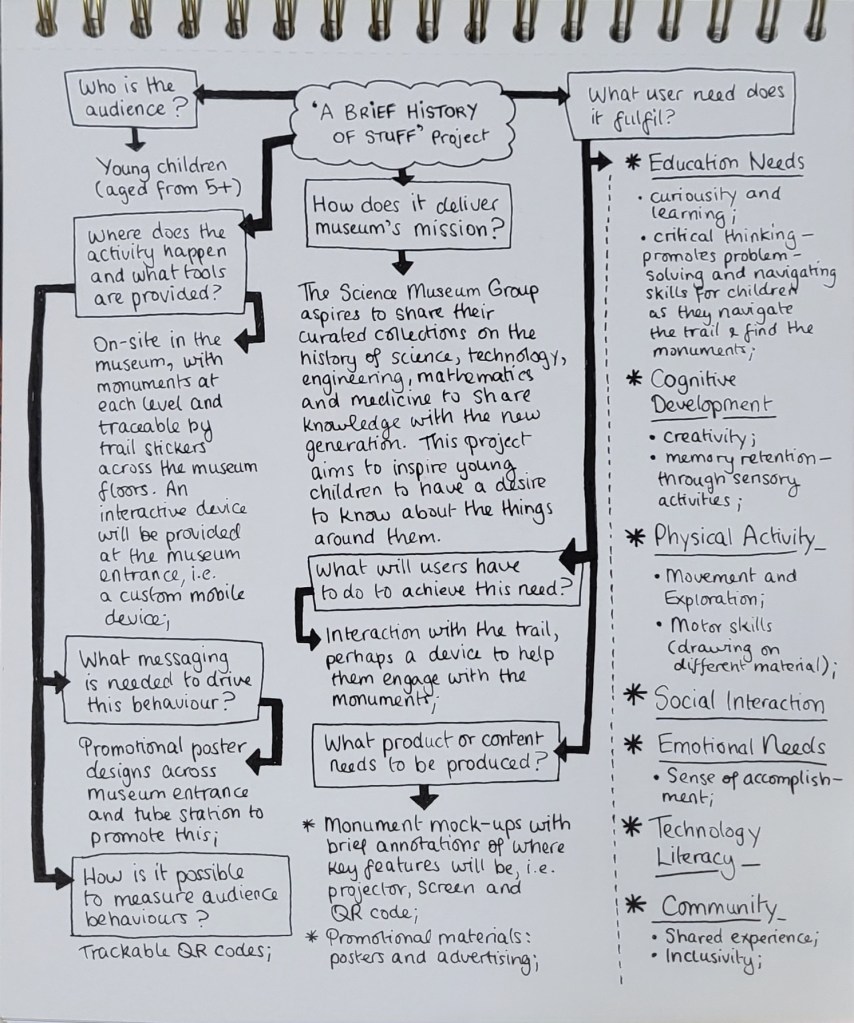
I continue my development and I reflect back on Jonathan Stacks’ lecture, and I found his 8 questions to analyse your project with rather interesting. I’ve made a flowchart below of my thinking, to ensure I’m 100% with my project choice.
I went unto looking at existing 3D object mapping in the world, and came across Harrods’ Faberge Campaign in 2015. It was designed by JUSTSO, an award-winning agency specialising in window displays, pop-ups, retail architecture and brand communication.
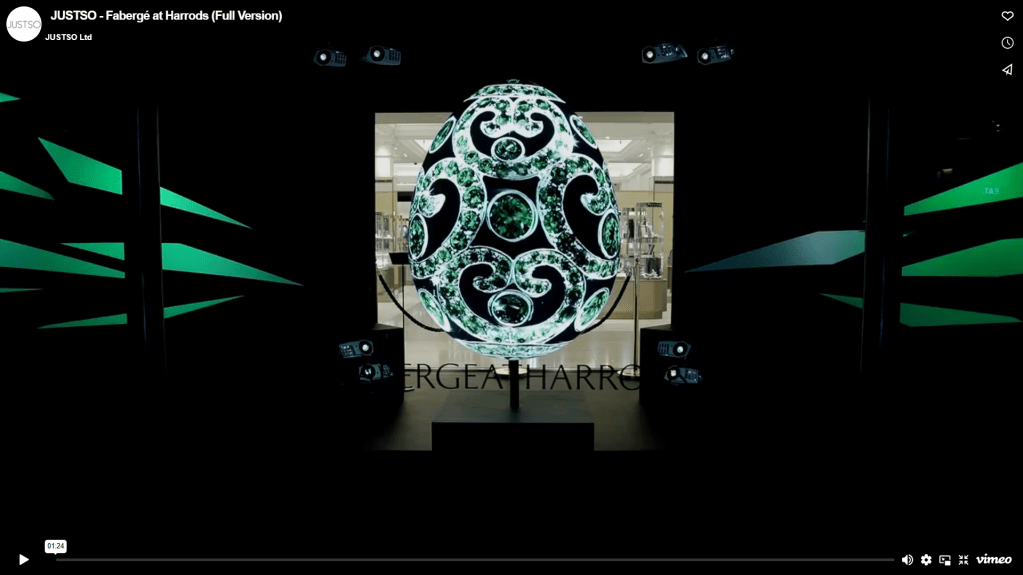
They work together with their retail design solutions and engineers to install a 1.5 metre 3D egg shape model that was then projected unto with intricate designs for Harrods’ pre-Easter Campaign. You can watch the video here on their website.
What I particularly found interesting with 3D object mapping is how grandiose the occassion it is used for, and usually it has a big impact for celebrations and anniversaries. I think its celebratory element can be used for education and bringing people together, hence why I’m very fascinated with using this as part of my project context.
Unfortunately, I don’t have the equipment to rend a 3D object mapping or even the skills to construct a 3D design, though I did have a go at playing with Adobe Neo. After spending hours on there, trying to craft somethign resembling a monument or statue, I realised I need more time than what I have to learn this programme. However, I am very curious and I hope to go back to it sometime.
Development
I proceed to develop my ideas, and began sketching concepts for an interactive device that children and trail-goers can use while seeking out the monuments.
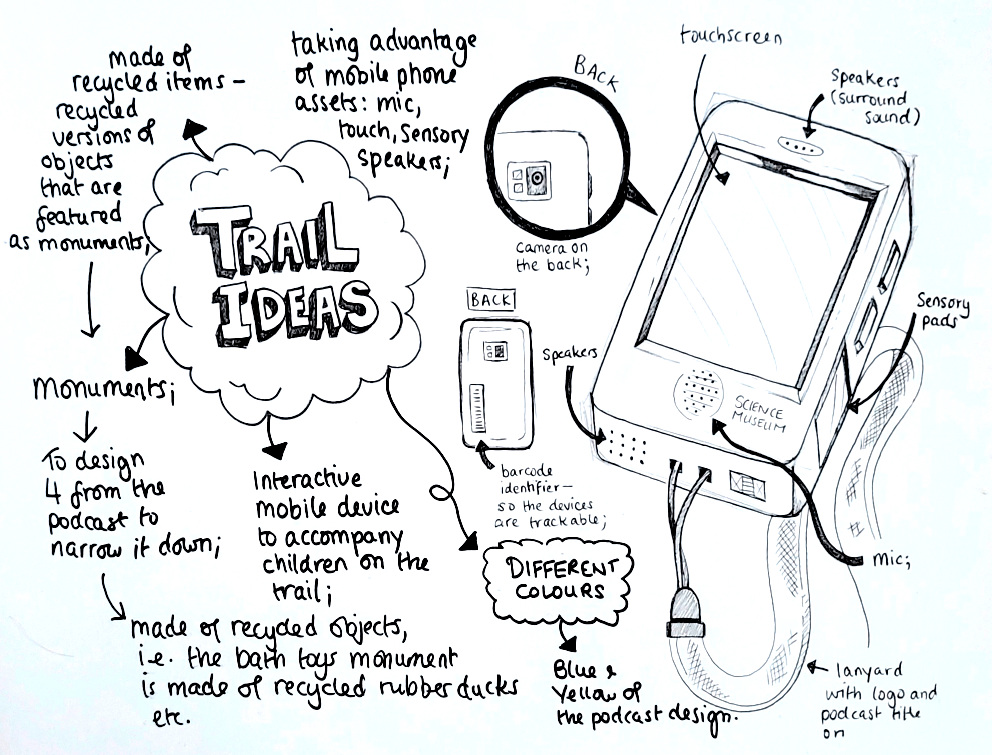
The idea of the device is to take advantage of the features of a mobile phone, with sensory interactions through the sensor pads along the sides where you hold it (the idea is that it would buzz when you’re near a monument), the audio receiver and microphone, the speakers with surround sound to make it fully immersive.
I went unto sketching the monuments themselves, as unfortunately I don’t have the skills to make a 3D asset or design, I had decided to approach this in a product design sort of way in which I directly sketched unto graph paper to make an artefact that’s slightly accurate.
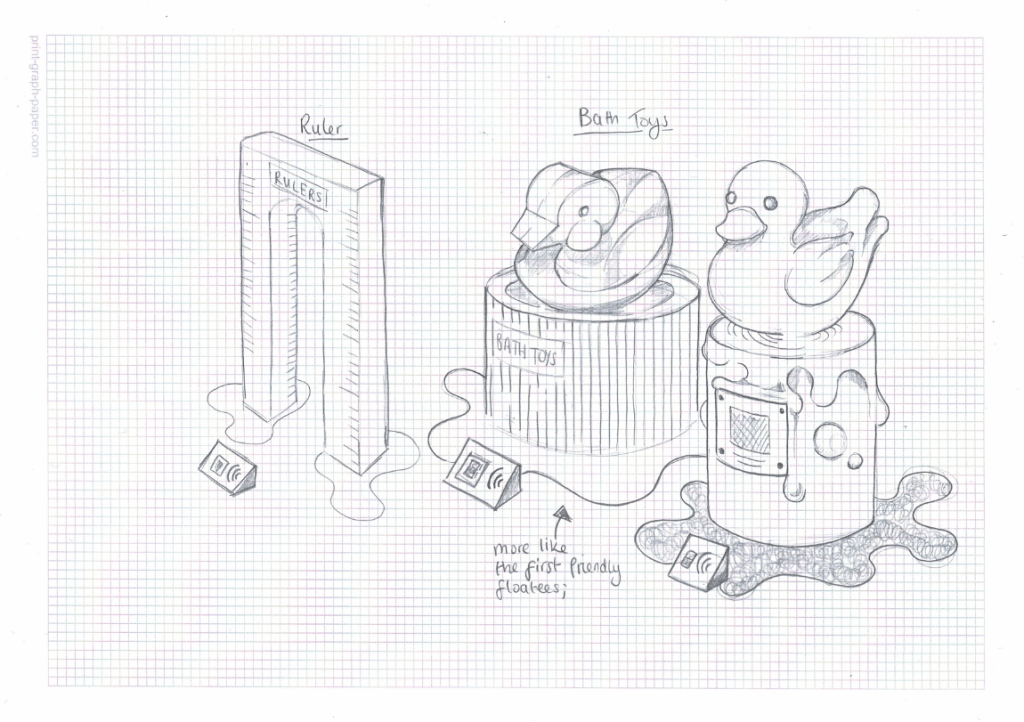
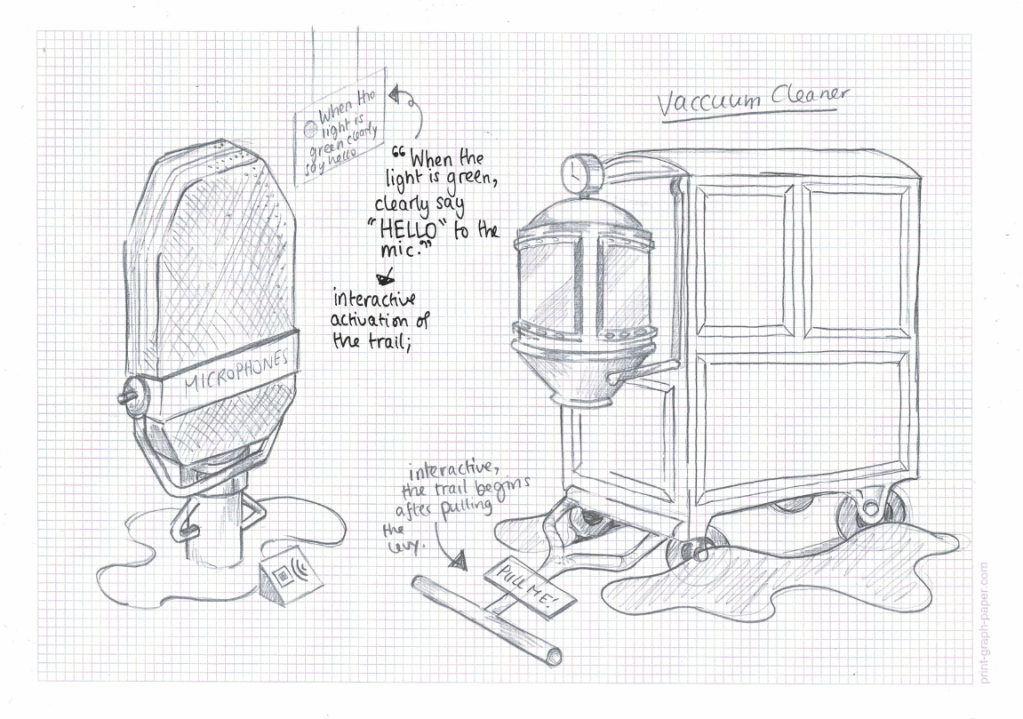
As I was running short on time due to life changes and illness, I wanted to adapt my monuments as well as I can, but sometimes its hard to envision a concept and I think this is something I struggled with for this project.
I then adapted my sketches into pen lineart as final drafts to be coloured and edited on my laptop using the Adobe Creative Suite.
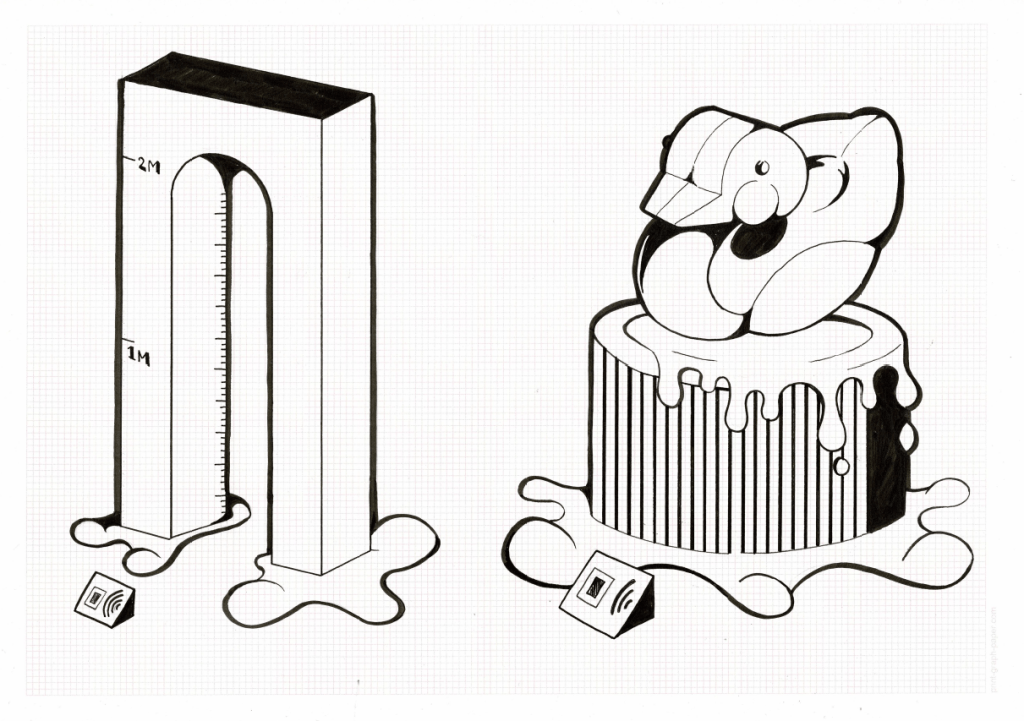
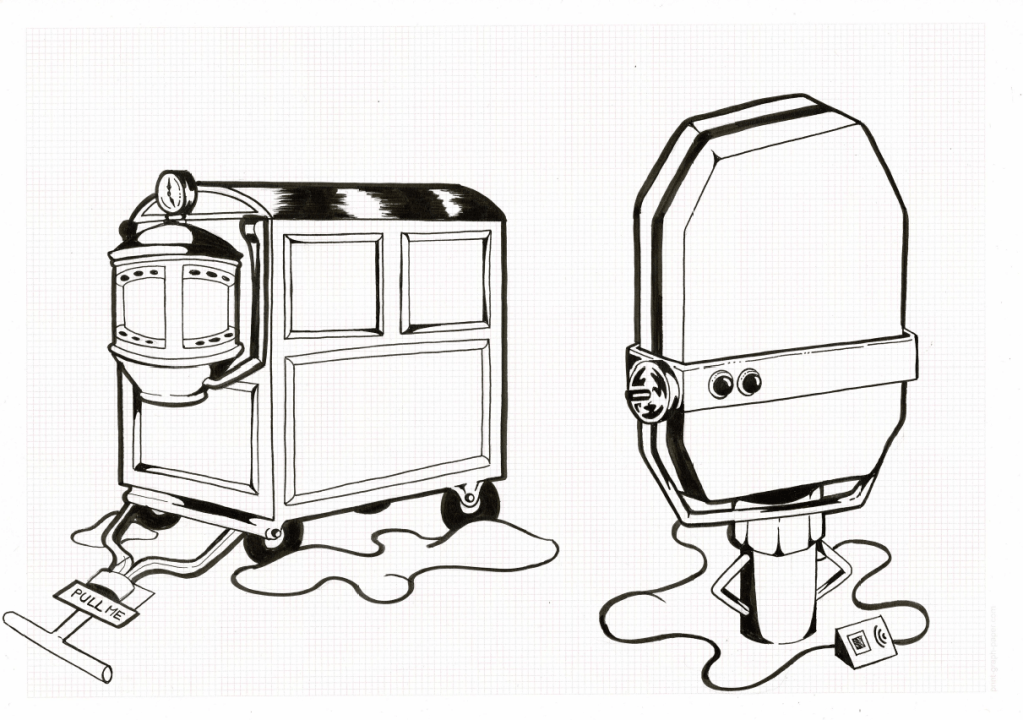
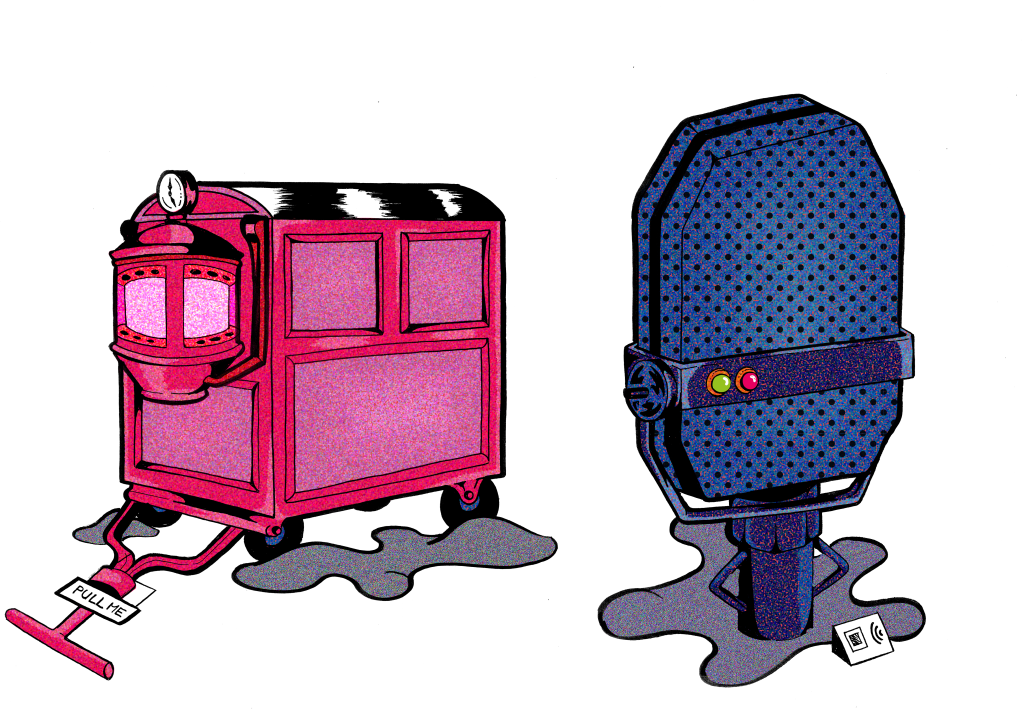
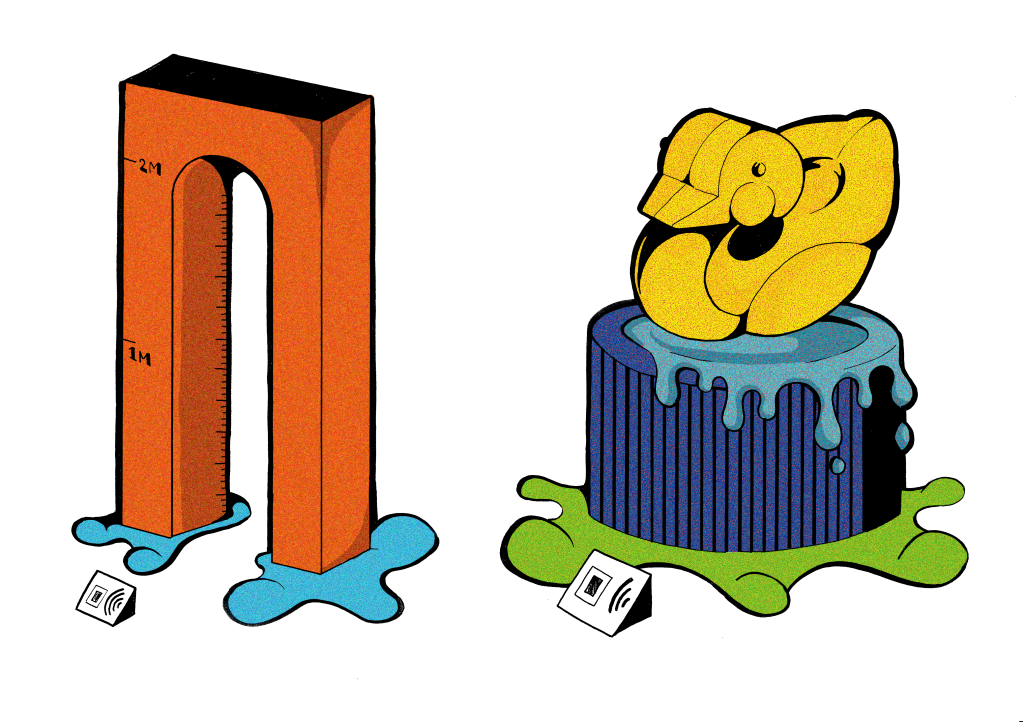
The final piece was coloured on ClipStudio Paint, I’ve kept it mainly flat as I want to showcase the concept of the design and added textures where in reality, it would be made out of recycled goods i.e. the bath toys monument is made out of recycled rubber ducks and bath toy friends etc. The blobby floor would be a textured carpet that hides the wires and anything that can be a hazard to the visitors when it comes to the technology of the monuments.
I had also developed a mock-up design of the trail device and the lanyard, so it won’t be lost. They have unique barcodes on them so they won’t be misplaced easily or stolen. I made use of the Science Museum’s colour palette to introduce alternate versions.

While I was designing the device, I had thought about the trail design and decided to go for something simpler but would still stand out when placed on the museum flooring. I took inspiration from hopscotch in playgrounds as they have an enticing effect to follow it.

Reflection
Though I have enjoyed this project and loved learning more about the Science Museum and the stories behind the objects around us, I think I didn’t give this project as much time as I had for my self-initiated project. In comparison, this one falls a bit short, and there were many avenues I wanted to explore, such as the trail having a reward system. I wanted the children to feel a sense of accomplishment. One of my ideas was that while on the trail, they could sketch a design of the monument on their devices while listening to the podcast episode. Afterwards, their work would be projected onto the monuments for several minutes, followed by a group animation with everyone’s work. At the end of the trail, they would have the option to donate their work to produce upcycled and recycled school stationery with their drawings on them, which would go to charities like Pens for Kids UK.
Overall, I’m satisfied with my Science Museum project, but there is still so much opportunity to explore, including perhaps a UI design of the trail device app. Despite this, it has given me a lot of insight into my work and interests. I’ve tried 3D modeling with Neo, which I plan to learn more about in the future. It’s good to embrace different perspectives, such as product design.
Thank you for listening to my project. I sincerely hope you give the podcast a go – it is fantastic, and the host is very personable and likable! The book itself is also a good read. Maybe you’ll become curious about everyday objects like I did!
 Gennifer's Blog
Leave a comment