Project 2: Science Museum Group
This week, I continued to develop my project idea and explored strategies to bring it to fruition. I took notes and found inspiration from the webinar. It was great to see the same artists again, as they previously provided valuable advice and have excellent insights into what makes a successful project.
“How do you develop a strategy and project plan
for a client/audience in a continually evolving
global market?”
Torsten Posselt (FELD STUDIO)
There is no rule in creating structure and process in order to approach a creative brief, but, if possible, it is always good to approach a client in person and meet people in person as you can analyse the sort of client you’re working with. What I take from this in relation to my project is that it would be good to have some sort of primary research in relation to my project to inspire some ideas. He also emphasises that establishing a free environment where you as a designer can be flexible.
Matthew Jones and Michelle Dona (ACCEPT & PROCEED)
Keeping updated with global trends, and not let creative briefs restrict you from thinking outside the box or coming up with interesting concepts.
Deep dive insight into a project market and having open discussions about the project and how others may see it as a product. It’s important to collaborate and receive feedback from peers and tutors to realise an achievable outcome.
Wouter Dirks (STUDIO DUMBAR)
Strategy component is important and the first thing to do is research the brief, also research the client (in my case, Science Museum Group). Wouter also explains brand workshops that their studio runs through with the client and other staff within the organisation to get a scope of what they see that’s out in the world. I think this is a great way of broadening creative perspective by getting different backgrounds involved.
Stijn van de Ven (EDEN SPIEKERMANN)
Crafting a strategy would be based on what you do, combined with what the client believes you do.
I found it interesting that though they’re one global agency, their different branches specialise in different focuses within the industry, i.e. their New York branch operates as a boutique agency, but their Berlin headquarters has a different approach to the market. It shows that they embrace different domains of design, and that they want to expand into them more. Furthermore, it also shows clients who they could approach if they’re looking for something specific, Eden Spiekermann can deliver.
It makes me feel inspired, and I hope to work for an agency with a similar ethos one day.
Luke Veerman (EDEN SPIEKERMANN)
It’s important to stay aware of global trends in both your industry of interest and the one you’re currently in. Understanding what clients are looking for now is crucial.
You need to understand your audience and be aware of who will use your product, especially on a global scale. Seeking feedback from people worldwide is essential. Luke highlights the importance of creating an accessible project that caters not just to a specific area but to the entire world. This approach is ambitious yet inclusive, aiming to appeal to a diverse and broad audience.
OUTERNET LONDON –
Tottenham Court Road
I recently went to London to visit a friend and hoped to conduct some primary research at the Science Museum. However, due to high visitor numbers, I was turned away at the entrance since I had not planned ahead and booked admission tickets. Sadly, I missed the chance to visit the museum within the timeline of my project. On a brighter note, I stumbled upon the Outernet immersive experience near the Tottenham Court Road tube station.
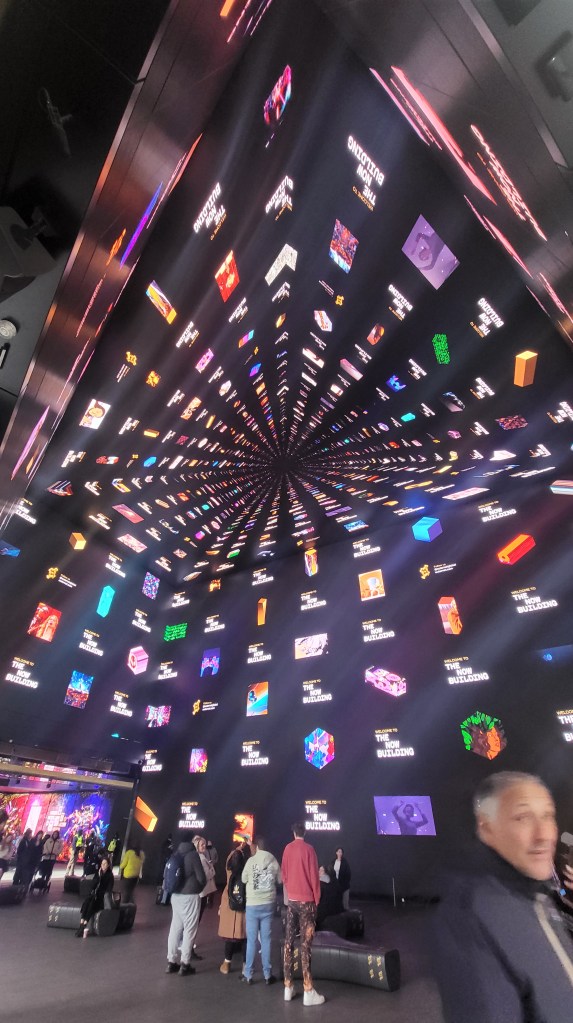
I had also captured a video of the Christmas animation they placed over the venue, which can be watched here on Dropbox. I was inspired by this, and how fun and interactive the stories that were told across the space. There were many people of diverse backgrounds united under one area, and appreciating this immersive experience. It made me feel motivated to create something in a similar way (though not to scale and grandeur the Outernet space had!), but to use it to nurture young minds to have a desire to learn more about the things around them.
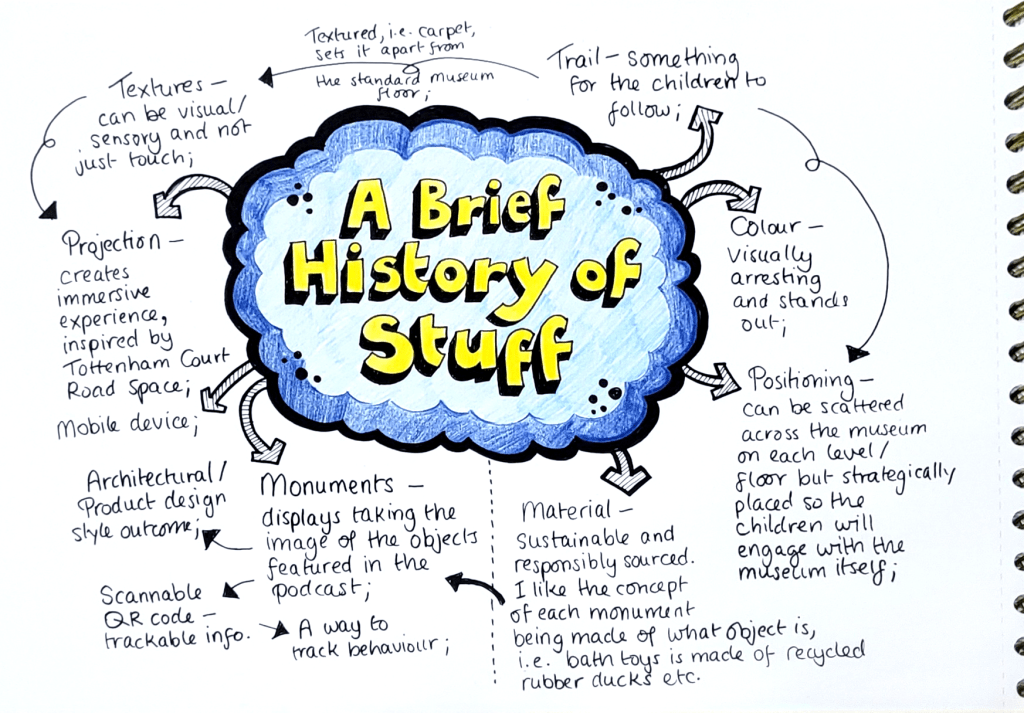
I had also thought about, what would it be like to project unto monuments or 3D objects? I’ve set about a mind map below outlining an idea for an engaging Monument Trail based on ‘A Brief History of Stuff’.
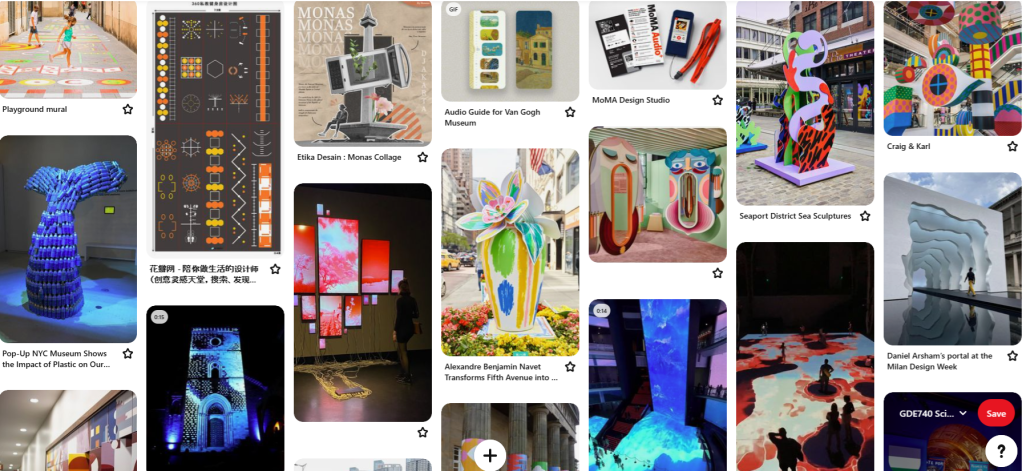
I also made a moodboard on my Pinterest, which can be found here or below as a screenshot. I actively looked into various monument designs and installations in hopes to influence my outcome. I also liked the idea of a trail, and took inspiration from playground floor designs as they’re quite nostalgic and it has that effect on younger children to follow it through.
 Gennifer's Blog
Leave a comment