Project 2: Science Museum Group
At the start of Week 5 and the first week of the industry brief (Project 2), I referred to the content provided in our webinar. I took notes on the advice shared by various artists and members of a design agency, hoping to draw inspiration for my work over the next six weeks. The designers and collectives were asked the question,
“How do you research and identify new industry projects or opportunities that you’d like to
participate in?”
Torsten Posselt of FELD STUDIO, BERLIN FELD Studio has a versatile, multimedia background, excelling in various domains while maintaining a strong reputation in traditional graphic design. Torsten suggests choosing projects based on personal preferences, like illustration. However, exploring unfamiliar areas can yield unique results, differing from regular work.
Matthew Jones and Michelle Dona of ACCEPT & PROCEED, LONDON Established in 2007, ACCEPT & PROCEED shifted focus to create designs with positive impacts, working with visionary clients. Their collaborative system allows designers to concentrate on passion projects, resonating with their commitment to making the world a better place.
Wouter Dirks of STUDIO DUMBAR, ROTTERDAM With a background in Business Administration, Wouter highlights that design intersects various industries. Studio Dumbar focuses on branding, visual identity, and motion graphics, expanding into new domains through a partnership with Dept, a global digital agency. Strong partnerships can propel you into the limelight.
Stijn van de Ven of EDEN SPIEKERMANN, AMSTERDAM Stijn, with expertise in visual communication and branding design, emphasizes the importance of thorough research when exploring new domains. A solid reputation leads to repeat business and referrals, and inviting client insights can result in positive responses.
Luke Veerman of EDEN SPIEKERMANN, AMSTERDAM Luke, a UX and service designer, has a background in industrial and product design that evolved into strategic design. He advises aligning projects with your skillset and building expertise in specific areas. His work in airport design opened opportunities in similar fields like Dubai or Sydney Airports, highlighting effective industry entry methods.
Reflection: The webinar showcased the diverse, multimedia skills of designers who embrace both traditional and modern graphic design principles. Their willingness to expand beyond their expertise to become better designers resonated with me. I’ve always preferred an open-minded approach to problem-solving, as you never know where it could lead, and it always presents something interesting.
I later discovered that I had watched an older webinar, but it was filled with inspiration that I want to carry forward. Thanks to the artists’ insights, I now have a clear idea of what I want to pursue, or at least a sense of the direction I want to take.
Because of this, I am shifting my focus to target younger children, aiming to inspire their curiosity and learning. In this digital age, mobile devices often dominate their attention, but I want to leverage these tools to encourage educational engagement. Nurturing younger children can help them become more knowledgeable and adopt an open-minded approach to learning and problem-solving. My project will harness the connectivity of mobile devices to foster a love for learning in children.
John Stacks Lecture
I also watched the John Stacks Lecture and took some notes that would help me create my project:
- It’s crucial for museums to have durable, robust exhibitions and materials, considering the diverse and energetic visitors they attract. School children, in particular, can inadvertently cause damage to museum equipment and displays if they are not made of strong, resilient materials.
- Interactive exhibits like WonderLab for children, which focus on physical engagement rather than screens, are an effective way to present information to niche audiences.
- Science Museum objects need story and context behind them for people to engage with them. Because of this, when the museum exhibits certain objects, they’re usually packaged as a collection or series that people can learn about.
John discusses various project outcomes and themes to consider:
- Interactive Archive: An animated zine with a person’s hand turning pages, creating a more personable and lively effect compared to sterile archives (there was an example John used in the webinar which wasn’t named unfortunately).
- Mobile Tours: Experiences integrated into mobile devices, utilizing features like motion sensitivity, camera, audio receiver, and microphone to enhance user experience.
- Exhibitions: Deciding whether the exhibition will be digital or interactive.
- Location-Based: Exhibitions situated in specific locations (e.g., train stations) to take advantage of public traction and enhance user experience.
- Virtual Reality: Immersive experiences that can be accessed remotely.
- Augmented Reality: Integrating real-life objects to enhance the learning experience.
- Games: Engaging formats with parallel play, suitable for social group visits to museums.
- Interactive Projections: Creating immersive experiences with a WOW factor, utilizing special design and the projection space.
I should also consider the continuity of the project, possibly through a monthly competition on the museum’s social media or a survey to gather feedback on what the children want to see in future projects. Additionally, I need to think about implementing a Reward System. Since I want to create an interactive trail for children, and traditionally trails and treasure hunts offer rewards, this could be an important element. I will finalize these details once I have defined the overall scope of my project.
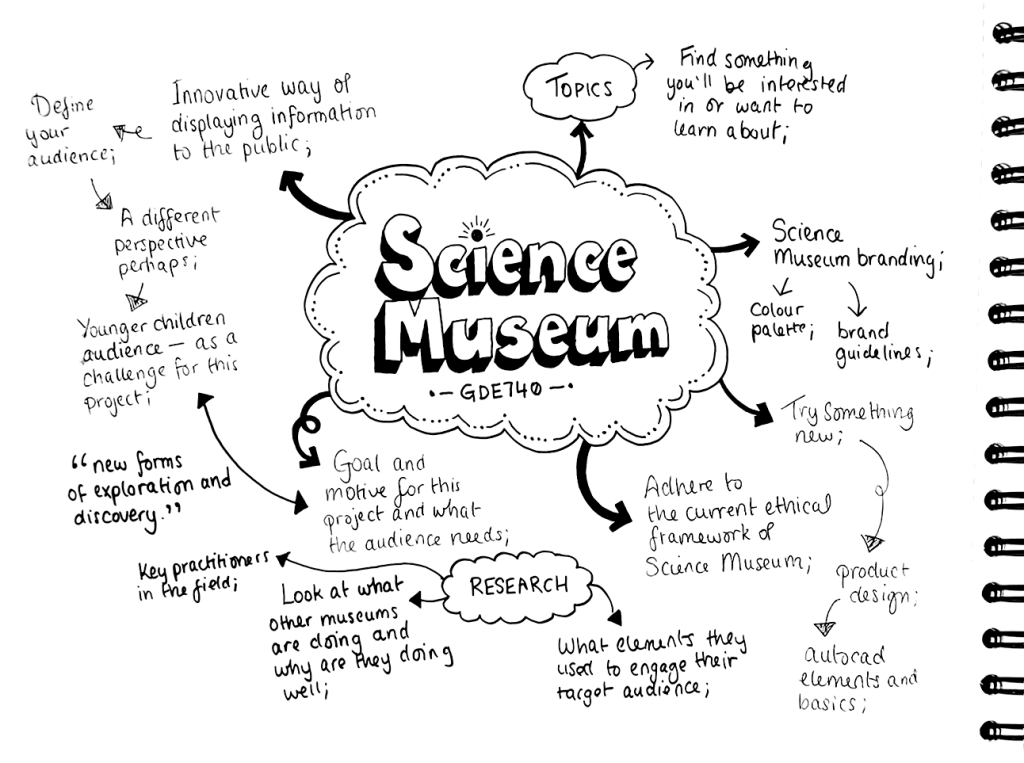
With all these notes in mind, I put down my initial ideas on a mind map on how I will proceed with this project.
Research Task
For this task, I took notes on particular archives and collections of the Science Museum Group and their benefits and drawbacks they offer as a project. What would be the main hurdles they present me with in a creative sense – because of this, I’ve narrowed it down to three different things I found interesting and separated them into columns and my opinions on them.
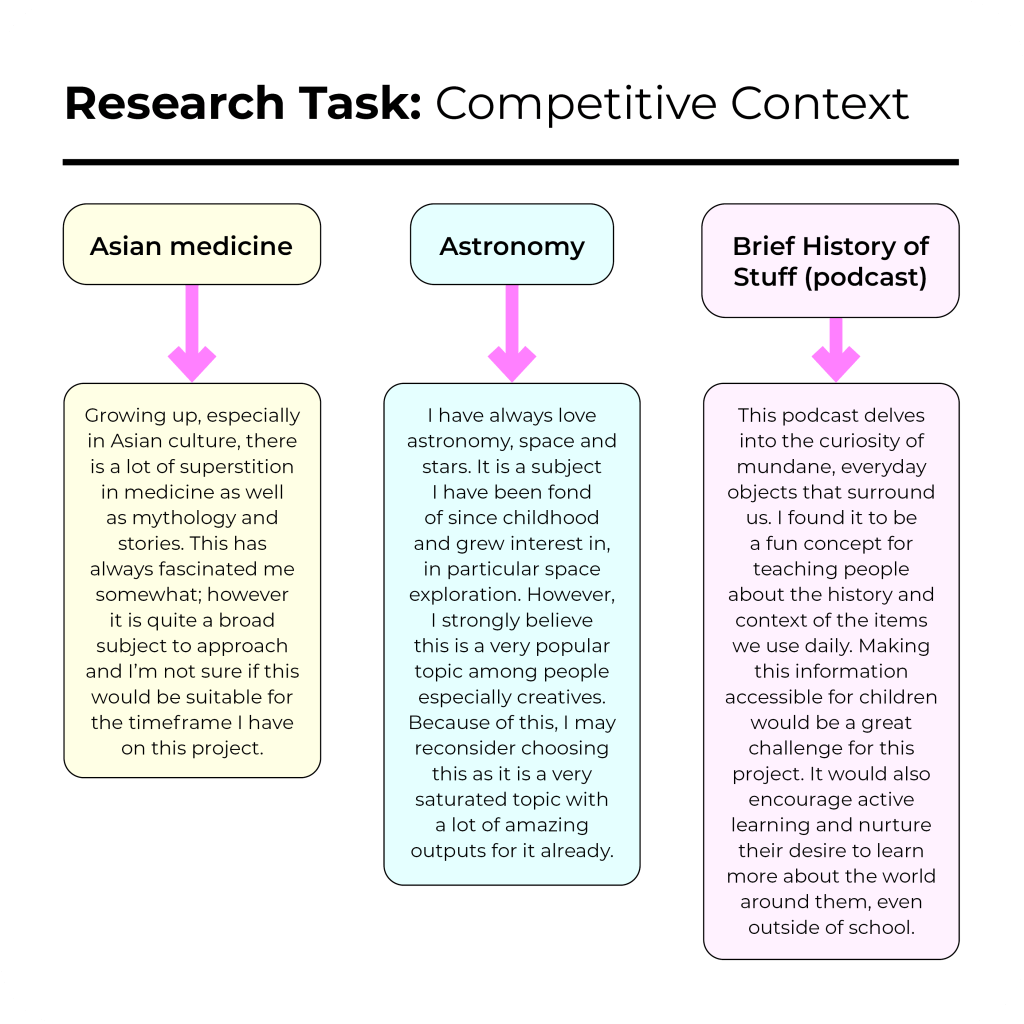
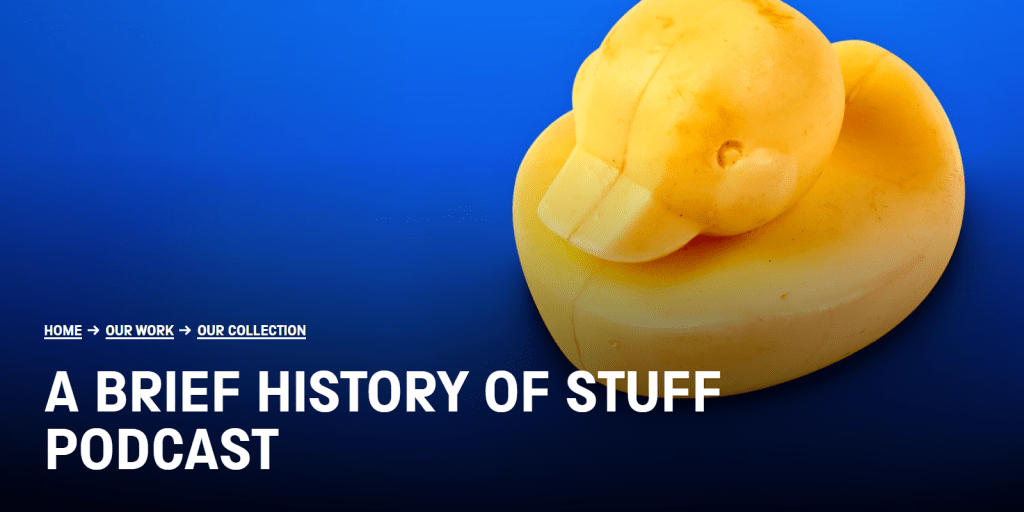
I chose to work on the ‘Brief History of Stuff’ after seeing it on the highlights page of the Science Museum Group website while navigating the collection. I thought it was quite interesting and have the podcast a few listens, it made me think it would be a great project to work on therefore I’ve chosen to expand on this and make it accessible for children to digest the information.
 Gennifer's Blog
Leave a comment